

Youth Remember: Día de los Muertos at the Alabama Center for the Arts
This Sunday, the Alabama Center for the Arts came alive with color, candlelight, and memory. In a beautiful one-day exhibition, students from Decatur City Schools presented their ofrendas — offerings built with love, crafted by hand, and rich with story.
The Visual Arts Walking Gallery held walls of vibrant pieces, each brushstroke echoing the heart of remembrance. Across the way, in the Performing Arts lobby, stood altars adorned with marigolds, sugar skulls, candles, and portraits — each one a window into the ways we honor those who came before us.


There was a stillness in the air that felt sacred. Children and families stood side by side, whispering names, lighting candles, remembering. In every color, every flower, every handmade detail, you could feel the pulse of heritage and the beauty of continuity.
Día de los Muertos is not just about loss. It’s about love — the kind that transcends time, the kind that keeps our ancestors close. This youth exhibition was a reminder that the next generation carries that love forward. They remember. They create. They keep the bridge between worlds open, bright, and alive.
May we all continue to build altars — in art, in home, in heart — to those who shaped our path.
Threads of Intention
Art is never just what it seems.
What began as yarn and glue, color and patience, became something sacred — a weaving of energy, emotion, and time. Each strand carries memory; each loop, a prayer. The texture, imperfect and organic, mirrors the pulse of life itself — uneven, layered, and beautifully human.
The mustard yellow represents the sun — the creative spark that drives all acts of becoming. The deep green grounds it, reminding the spirit to root before it rises. The ivory and gray speak softly of stillness, surrender, and the spaces between transformation. And that burgundy thread — raw and strong — reminds us that love and pain are often spun from the same spool.
When we create with our hands, we are not simply crafting; we are conjuring. We are reminding the universe that we are still connected to its design. That even in a world of pixels and plastic, there remains something eternal in the act of making.
This piece, though humble in material, is an altar in disguise — a physical manifestation of intention and surrender. It reminds us that divinity doesn’t demand perfection; it asks only for presence.
Every knot is a story. Every color, a heartbeat.
And when the work is done, the spirit rests — not because it’s finished, but because it’s finally heard.

The Proud Sea Roach: Light, Darkness, and the Truth of Balance
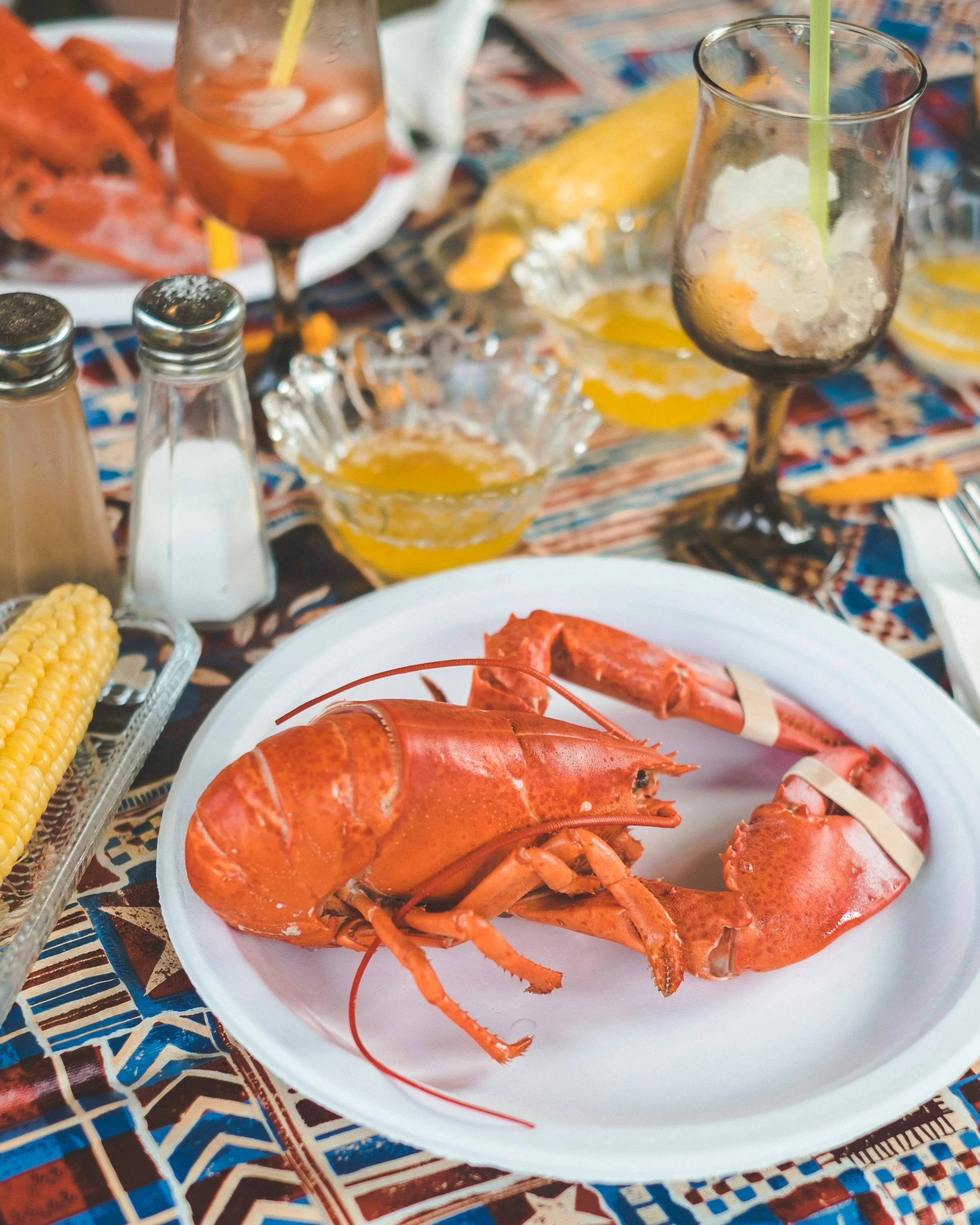
Image credit: Daniel Norris
When we first wake up to who we are, many of us go on a high — and we stay there for a while. Everything becomes about light and love, peace and goodness. That is beautiful, yes, but it is not the whole of reality. Nothing on earth exists in light alone. As above, so below is not just a mystical saying — it is a reminder of duality, of balance. Where there is darkness, there shall be light. But friends, it is also true that where there is light, there shall be darkness.
None of us became beings of love and light without first enduring the traumas, prisons, and wounds that shaped us. And as I move deeper into the spiritual, metaphysical, and bruja community, I am struck by how many people believe it must be one or the other — either light or dark. Yet every major philosophical, theological, and metaphysical principle is based on balance. It is the one who can acknowledge both who comes closest to true enlightenment.
When I began my spiritual awakening, I did not cut out friends or habits simply because they weren’t on my path. I cut them out because they contributed to my imbalance. Old patterns that kept me stuck in chaos, shame, and survival had to be released. The darkness has been my greatest teacher, because it forced me to examine the hardest parts of my life with love and compassion. That is where I found the light.
I could revisit myself as a child at age eight and comfort the girl who lost her grandparents. I could forgive my parents by re-examining the pain that made me resent them. And even now, though I walk in light, I am reminded daily of the patterns that shaped me. Old ways die hard, and they are easier than this new path. But I acknowledge both. And in acknowledging both, I can see the good in those I once judged as bad, and the shadow in those I once saw only as good.
This is the problem with many religious or spiritual groups — whether covens, churches, or even cults (yes, I said it with a laugh) — they fall into imbalance. Rules are made “for the greater good,” but often darkness is treated as something to be hidden, ignored, or denied. That is when darkness becomes “occult,” literally meaning hidden. But hiding the dark breeds shame, and in shame lies guilt, and in guilt lie lies. The awakened path asks us to face both openly. To admit our mistakes, to say: yes, I have fallen, and still I rise.
We are not here to be perfect. We are here to learn. And through our learning, we teach. Through our mistakes, we model resilience. We tell each other: it’s okay to fuck up. It’s even okay to fuck up royally. Because every stumble is a step on the path toward balance.
Lessons from the Deep
Think of the ocean. For centuries, scientists did not know what existed in the deepest dark — and yet life was there all along. Fish, coral, whole ecosystems thrived in places no light reached. They did not cease to exist because we could not perceive them. The dark dwellers were never “less” than those who swam in the light of the surface. In fact, they are crucial to the ocean’s balance.
Now think of the lobster. A bottom dweller, often called the “cockroach of the sea.” And yet when brought to the surface, it becomes a delicacy, a luxury, a prize. Its meat is tender and rich, valued precisely because it has survived and grown in the depths. Lobsters can live over a hundred years, as long as they continue to shed and renew their exoskeleton. Here lies another lesson in duality: what is dismissed as lowly becomes exalted; what is hidden in the depths becomes treasure when revealed.
So too with us. We are all born surface dwellers. In our struggles, we sink to the bottom. In our awakening, we rise again, transformed, carrying the depth with us. Like the lobster, our very survival and renewal make us a prize — not because we stayed in the light, but because we lived in the dark and still grew.
Never forget: we all were sea roaches once.
What Is Friendship?
As I move through this spiritual awakening, I find myself questioning the meaning of friendship almost every day. I’ve noticed that as I change, my friends change too. I once believed that true friendships could weather any storm. But years ago, during my nervous breakdown—and even before, when my behavior became increasingly erratic—my friendships shifted.
People I had known for years seemed to disappear. At the time, I felt abandoned. But looking back, I wonder—did they leave me, or did I change so much that they no longer recognized me? Even in intimate relationships, friendship transforms during a spiritual awakening.
I am not the same person I was in 2020. I am certainly not the same person I was in 2016. My changes haven’t been just about age. I’ve walked through at least two dark nights of the soul.

In 2016, I was hospitalized after I had, quite literally, lost my mind. When I entered the hospital, they put me in a room with no handles and asked me to sit on the bed. I hadn’t yet accepted how much I had changed, or that others believed it was best to keep me in that kind of room. How had I gone from being an officer in the military—strutting around in my uniform, proud to carry the flag on my arm—to this? I had once vowed I would never become “a crazy,” yet here I was.
In that moment, I realized I wasn’t even my own friend anymore.
At the VA hospital, I was surrounded by others who, like me, had once worn the uniform with pride. Rank didn’t matter there. Some were homeless, some had families, and some had already lost so much. But for 10 days, we were bound by one shared truth: we had all been committed. These people—strangers just days before—became my friends. I wasn’t alone.
When I left the hospital, I had to relearn what friendship meant. Many of my old friends were gone—some because I had pushed them away, others because they had stepped back.
So I began to wonder: do friendships change because we change, or because other people change? I think it’s both.
Friendship, I’ve learned, is like the ocean—fluid, shifting, and alive. Sometimes the tide brings people back, sometimes it carries them away. We grow, we swell, we recede. With these changes come new connections.
Now, I believe people are meant to come and go from our lives because we’re constantly evolving. Those who remain for years are rare treasures—proof that you’ve both been able to grow, adapt, and change together.
In the darkest times, you truly see the value of friendship. But don’t carry guilt or shame for the ones you’ve lost. They served their purpose in your life, and now it’s time to welcome the new.
Change will always come. The gift is learning to greet it with open arms.
We Carry It All: Martyr or Matriarch
There’s a thin line between devotion and depletion. Between being the backbone of a family and becoming invisible within it. Between being the victim or the victor. Many of us were never taught how to distinguish the sacred role of a matriarch from the silent suffering of a martyr—we just inherited the weight and called it love. And let’s admit it—sometimes, we feel a hint of validation as we’re dying on the hill.
But at what cost?
Are we leading as matriarchs, rooted in wisdom and strength? Or are we shrinking into martyrdom, quietly disappearing under the guise of service?
There’s a thin line between devotion and depletion. Between being the backbone of a family and becoming invisible within it. Between being the victim or the victor. Many of us were never taught how to distinguish the sacred role of a matriarch from the silent suffering of a martyr—we just inherited the weight and called it love. And let’s admit it—sometimes, we feel a hint of validation as we’re dying on the hill.
But at what cost?
Are we leading as matriarchs, rooted in wisdom and strength? Or are we shrinking into martyrdom, quietly disappearing under the guise of service?
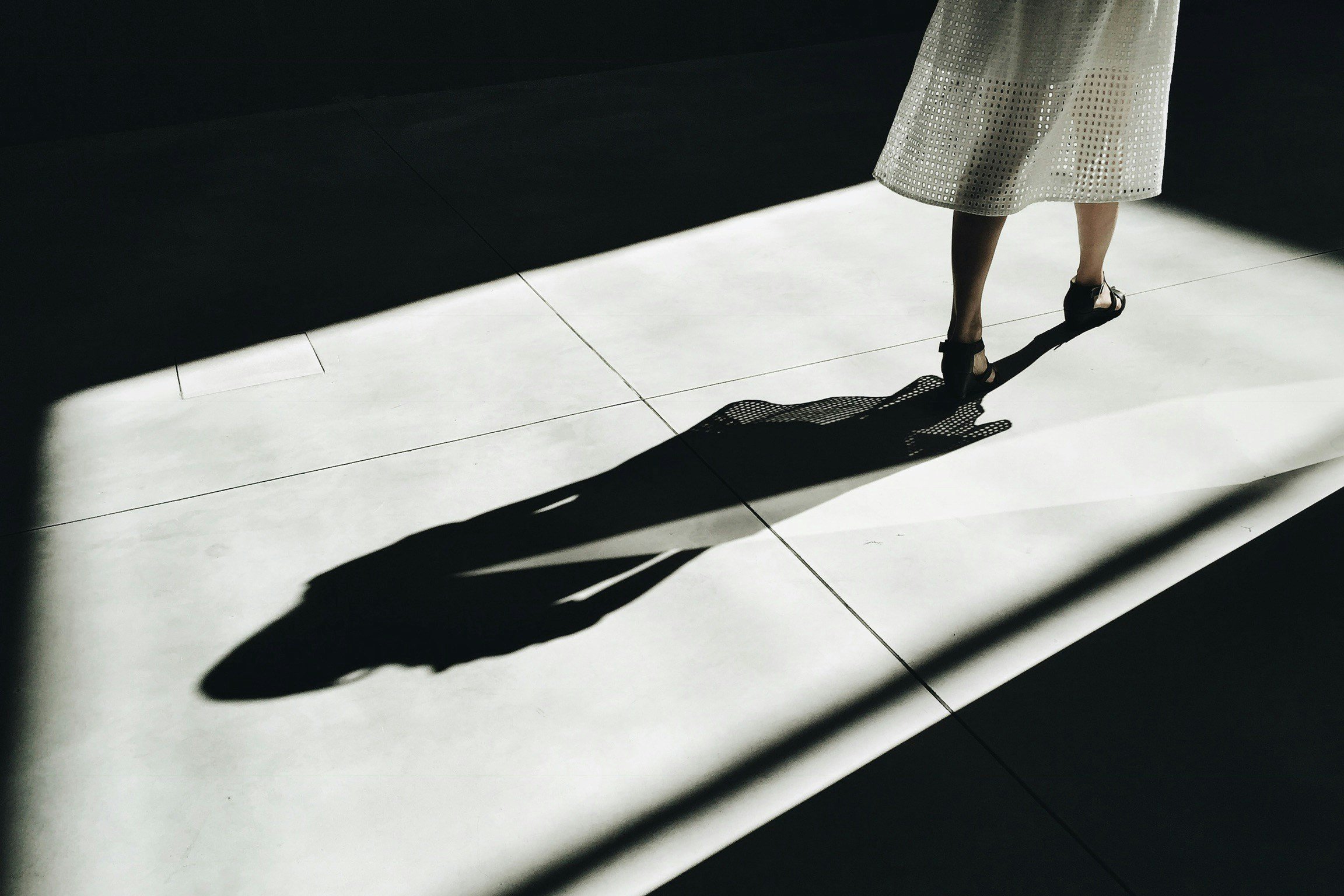
There’s something quietly radical about a woman deciding to take care of herself. It might not sound revolutionary—taking a bath alone, going on a walk, saying no—but for so many of us, especially mothers and wives, these tiny moments of self-preservation are acts of rebellion. Because the truth is: we are carrying it all. And at times, we are like shadows, cosplaying as human beings.
OK, that's only half true—some of us have help. But societal expectations still place the majority of domestic labor on women. According to the OECD, women in developed countries spend an average of 4.33 hours per day on unpaid work versus 2.33 hours for men (theguardian.com, worldatlas.com). In the United States, women average 112 minutes of housework daily, while men do about 58 minutes (guestsonearth.com). In South Korea, the imbalance is stark: women spend 147 minutes, men just 21 each day on chores (guestsonearth.com). These staggering statistics prove it isn’t just in my head—it’s a societal norm.

We’re expected to work, parent, keep the house, plan meals, manage appointments, research schools, soothe tears, balance budgets—and still look good doing it. We’re taught to make it look easy, and if we stumble, we’re told we didn’t try hard enough.
Postpartum? Menopause? Aging? Depression? Burnout? Often met with silence or dismissal. My own postpartum breakdown—while raising kids, attending school and Army duties and navigating divorce—left me unrecognizable even to myself. I forgot I had a self at all. I forgot I even existed.
And the kicker? Many men still don’t get it. Even the well-meaning ones. Mine tries—and does a pretty good job making sense of the voices in my head. But far too often, the mental load, emotional labor, and physical exhaustion land squarely on our shoulders.
That’s not to say men don’t have their own identity battles. They do. And I have deep compassion for that—especially as a woman who’s been loved, supported, and made a mother by men. But while men wrestle with their own struggles, what’s often expected of women can feel wildly disproportionate in both volume and weight.
There was a time when I was the sole provider for our household while my husband worked through his immigration paperwork. And still—every meal, every appointment, every mess—defaulted to me. Until one day, I had to put my foot down and say: No more.
My wake-up was brutal: I'd been living in self-imposed victimhood because I wouldn't ask for help. And worse, I used it as leverage—“Look what I do.” But when help came, I refused it, clinging to the illusion of independence. I had to first acknowledge that I was hiding behind my exhaustion to feel seen. Then I had to see my own worth.
Part of my resistance came from childhood—asking for help felt shameful. But I had to learn I was worthy of receiving.
Did it happen overnight? Absolutely not. I still catch myself complaining, even choosing victimhood some days because it gets me attention. But is that true recognition? Or manipulation? Probably the latter.
I share this to remind us: we are worth it, and we are works in progress. We all hurt people when we’re in our emotions. But it’s on us to change that immediately. Never let it become habit.
Sacrifice is choice. Living in sacrifice is lifestyle. We forget because society tells us to. We sacrifice until we disappear.
But we are not invisible. We are powerful. We give life, hold history, and guard the sacred—which is why we've been silenced and oppressed; we threaten systems built on domination and disconnection.
This isn’t about modern feminism, diluted and misunderstood—it’s about womanhood: the raw truth of who we are. It’s about knowing our limits, honoring our spirit, and choosing to exist fully. It’s about taking up space and refusing to boil down to nothing.
So to every woman reading this: take the nap. Ask for help. Say no. Eat first. Speak up. Skip the laundry. Choose you.
Because when you do, you aren’t just healing yourself. You’re breaking a cycle. You’re changing history. You’re teaching the next generation that worth isn’t measured by how much we endure—but by how fiercely we learn to love ourselves.
You are not alone. You have a friend in me. I love you.
This is the beginning....
This is the beginning of something great.
This is the moment I open my world to you — in complete acceptance of the fact that I am not perfect.
That’s right. I am not perfect.
We are all, at some point, driven by this unattainable obsession with perfection — and in that pursuit, we miss how perfect we already are. We miss the perfect moments we’ve already lived, because as they say, we can’t see the trees for the forest.

For this, I believe, is our fate as human beings.
I am stepping onto a path of transparency.
This is my calling — because I was called to be a shaman.
When I first had the vision that I was a shaman, I didn’t believe it. Why?
Because I thought:
“Shamans are perfect people. They were raised in sacred traditions, trained from birth, pure and untouchable. Their robes are spotless.”
But that was Perfection, whispering her old lies again.
The truth is:
A shaman is shaped by guilt, shame, regret, turmoil, and heartbreak.
A shaman is someone who has walked through the fire — through the darkness — and emerged on the other side. That is the only way they have enough empathy to be a shaman.
I believe God entrusted me with this unique journey so that I can meet anyone — anyone — without judgment.
I have hated myself.
I have regretted many of my choices.
I have lived in such deep turmoil that I once sought to end my life.
I have had my heart shattered, and I have shattered many hearts.
BUT I AM ALIVE.
A heart still beats in this chest, and blood still flows through these veins — and because of that, I can sit here today, typing these words to you, whoever you are, wherever you are reading this.
I will be open, so that you may feel free enough to be open with me.
At the end of the day, we were all born onto this Earth naked, fearless, and in need of nothing but love.
And so, as we walk this path together, I hope that I may offer peace — even to just one person.
Know this:
I love you already, even though I have not met you.
🌿 La Mesa de Epifania (Epifania’s Table) is my bilingual spiritual hub — a space woven into my larger creative brand, Tallulahmade.com.
While Tallulahmade is my home for all creative expression — art, photography, design, storytelling — Epifania’s Table is where my spiritual and shamanic journey lives and breathes.
At Epifania’s Table, I will explore food, spirituality, travel, ritual, healing, and the beautiful (and sometimes messy) process of becoming who we were always meant to be.
It is a space for sacred conversation — for laughter, honesty, vulnerability, and fearless living.
“The table is where everything happens.”
As I walk this path, I will share what I learn, what I taste, what I see, and what I feel.
I admit: I am afraid to be vulnerable.
I am afraid of the invisible commitments I make by writing this down and offering it to the world.
But here is what I can promise:
No matter what I write here, it will be my truth.
Welcome, dear soul, to my shaman journey.
Welcome to Epifania’s Table.